Ramdeo Seelochan
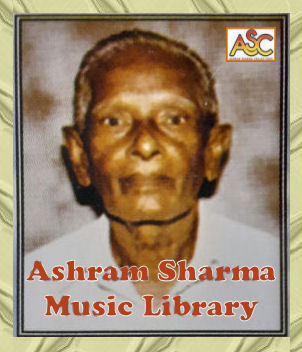
The multi-talented musician Ramdeo Seelochan was born in August 1940 in Barrackpore, South Trinidad, to Seelochan Salinti and Bachoon Salinti. At a very young age he moved with his parents to St. John’s Road, Avocat, where his lifelong passion for music began to take shape. A major influence in his early development was his father’s brother, an accomplished mandolin player, who inspired and encouraged the young Ramdeo to learn and master musical instruments. Ramdeo later married his beautiful and devoted wife Lutchmin, and together they were blessed with three sons, Steve, Michael, and Raymond, who would eventually follow in their father’s footsteps and become talented musicians in their own right.
During the 1960s, the versatile and visionary Ramdeo Seelochan founded the Gemini Indian Orchestra, a band that quickly rose to prominence and became one of the leading Indian Orchestras in Trinidad and Tobago. A true multi-instrumentalist, Ramdeo was an accomplished keyboardist, saxophonist, and an exceptional Hawaiian guitar player. His wide range of musical abilities also extended into the teaching of Indian dance, reflecting his deep commitment to the preservation and promotion of Indian culture and the performing arts. During this era he performed with many outstanding artistes from both Trinidad and Tobago and the Indian film industry, earning admiration for his musical versatility and professionalism. His reputation as a skilled musician and bandleader continued to grow steadily throughout the years.
One of the most memorable chapters of his career came between the mid-1980s and mid-1990s, when his band, the Gemini Indian Orchestra, was chosen by the world-renowned entertainer the Legendary music pioneer Sundar Popo to accompany him on several international tours in the United States. During this period, Ramdeo Seelochan and his band were honoured with the opportunity to perform at the world-famous Madison Square Garden in New York, becoming the first Indo-Caribbean band to achieve this remarkable milestone. The band later toured Canada and Guyana, further strengthening the musical partnership and friendship between the two celebrated artistes.
In 1989, Ramdeo migrated to the United States and renamed his ensemble The Gemini Band to give it a more international identity. Despite the change in name, his dedication, energy, and musical brilliance remained unchanged. In the United States, his band also had the opportunity to provide backup musical accompaniment for some of Calypso’s most celebrated performers, including the Mighty Sparrow, Calypso Rose, and Blue Boy, among others.
Throughout his distinguished career, Ramdeo Seelochan shared the stage with many renowned artistes including Ramnarine (Tole) Moonilal, Bisram (Tatsil) Moonilal, Mayodeen Ackbarali, Mungal Patasar, Sookdeo Jagdeo, Premchand Jagdeo, Baal and Lily John, Capil Gayadeen, Devindra Pooran, Narsaloo Ramaya, Polly Sookraj, Sally Edwards, Khamrune Ali, Lalchand “Rafi” Singh, Seeta Pooran Panday, Karamchand Maharaj, Harold Boodoo, Pandit Vishnu Maharaj, Paul Sookhai, Vishnu Rampersad and many other respected performers. His remarkable versatility and commanding stage presence always left audiences thoroughly entertained and deeply impressed.
In 1993, the musical world was saddened by the passing of this master musician and entertainer. Though he departed this life, the legacy of Ramdeo Seelochan continues to live on through his three talented sons Steve, Michael, and Raymond, who proudly carry forward the musical tradition of the band he founded.
Ramdeo Seelochan will always be remembered as a gifted musician, visionary bandleader, and a pioneer who made a lasting contribution to the musical heritage of Trinidad and Tobago and the Indo-Caribbean community worldwide.
“Do you have a special memory captured on film or audio? Please email any photos, videos, or audio recordings you may have to hindisongstt@gmail.com. We are looking to preserve the many beautiful moments shared with this ace musician Ramdeo Seelochan.” (Copyright Pandit Ashram Sharma 2026).
Photos

Ramdeo Seelochan - 1

Ramdeo Seelochan & His Gemini Band.

Ramdeo Seelochan (Keyboard) & Sundar Popo (Vocals) live on stage

Ramdeo Seelochan & His Band Members

Calypso King of The World Mighty Sparrow & Ramdeo Seelochan

Ramdeo Seelochan & Others
Videos
Audio Tracks